
Education & Environmental Literacy
Learning Through Connection
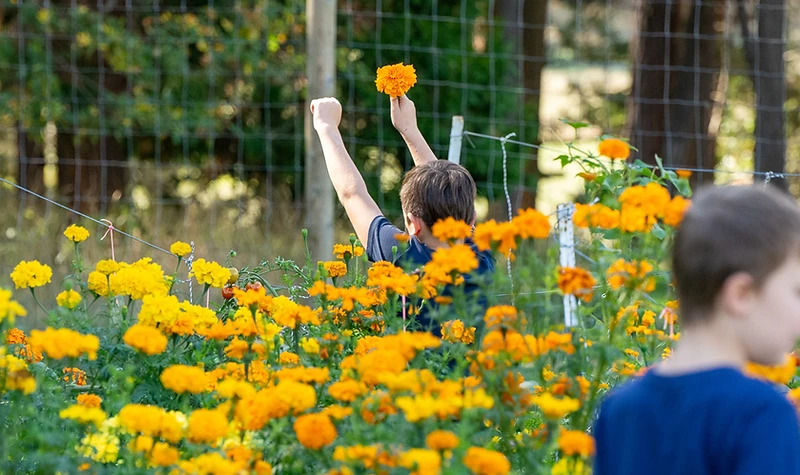
Sanctuary One brings environmental education, social-emotional learning, animals, agriculture, and service together in one living classroom.
A Place in Oregon's Story
Nature belongs to everyone — especially our youth.
In Oregon, we often celebrate a shared identity as outdoor enthusiasts deeply connected to nature. But for many — especially people of color and those with limited access to natural spaces — this narrative can feel out of reach. When the dominant culture says "we're all outdoorsy," yet you don't feel safe, welcomed, or able to afford the time or resources to explore the outdoors, it can be alienating.
We believe everyone deserves a place in Oregon's story. It's time to expand the narrative to reflect the full diversity of our communities and ensure that everyone has the opportunity to connect with the land.
Environmental Literacy
Care-farm learning aligns with the Oregon Environmental Literacy Plan — systems thinking; physical, living, and human systems; the interconnectedness of people and the environment; personal and civic responsibility; and investigating, planning, and creating a sustainable future.
Social-Emotional Learning
The framework connects to self-awareness and identity, self-management and agency, social awareness and belonging, relationship skills and collaborative problem-solving, and responsible decision-making and curiosity.
Where the Two Meet
Students can explore their values and relationship to nature, practice teamwork, build empathy, engage with environmental challenges, and make informed decisions grounded in community and ecological understanding.

Five Learning Strands
OELP's goal is for every student to become environmentally literate — equipped with the knowledge, skills, attitudes, and motivation to make responsible decisions about the environment.
01
Systems Thinking
Understanding how natural and human systems interact.
02
Physical, Living & Human Systems
Comprehending the components and dynamics of ecosystems and societies.
03
Interconnectedness of People & Environment
Recognizing the reciprocal impact of human actions and environmental health.
04
Personal & Civic Responsibility
Encouraging ethical behavior and active citizenship.
05
Investigate, Plan & Create a Sustainable Future
Empowering learners to explore issues and implement solutions.
How the Two Frameworks Align
Sanctuary One serves as a model for how environmental education can be deeply intertwined with emotional and social development.
Self-Awareness & Identity
Students explore personal values and beliefs about environmental issues, promoting introspection and connection to the natural world, and identify their strengths and challenges as environmental stewards.
Self-Management & Agency
Facing environmental challenges builds emotional resilience and perseverance. Students develop a sense of agency by advocating for environmental causes and taking constructive action.
Social Awareness & Belonging
Exposure to diverse perspectives on environmental issues encourages empathy and cultural understanding. A sense of belonging is cultivated both in nature and within a community that shares responsibility for environmental health.
Relationship Skills & Collaborative Problem-Solving
Students learn to communicate effectively, work in teams, and engage in collaborative solutions to real-world problems — practicing negotiation, compromise, and consensus-building.
Responsible Decision-Making & Curiosity
Learners are guided to make informed, ethical decisions based on environmental data and community values, nurturing curiosity that leads to lifelong learning.